
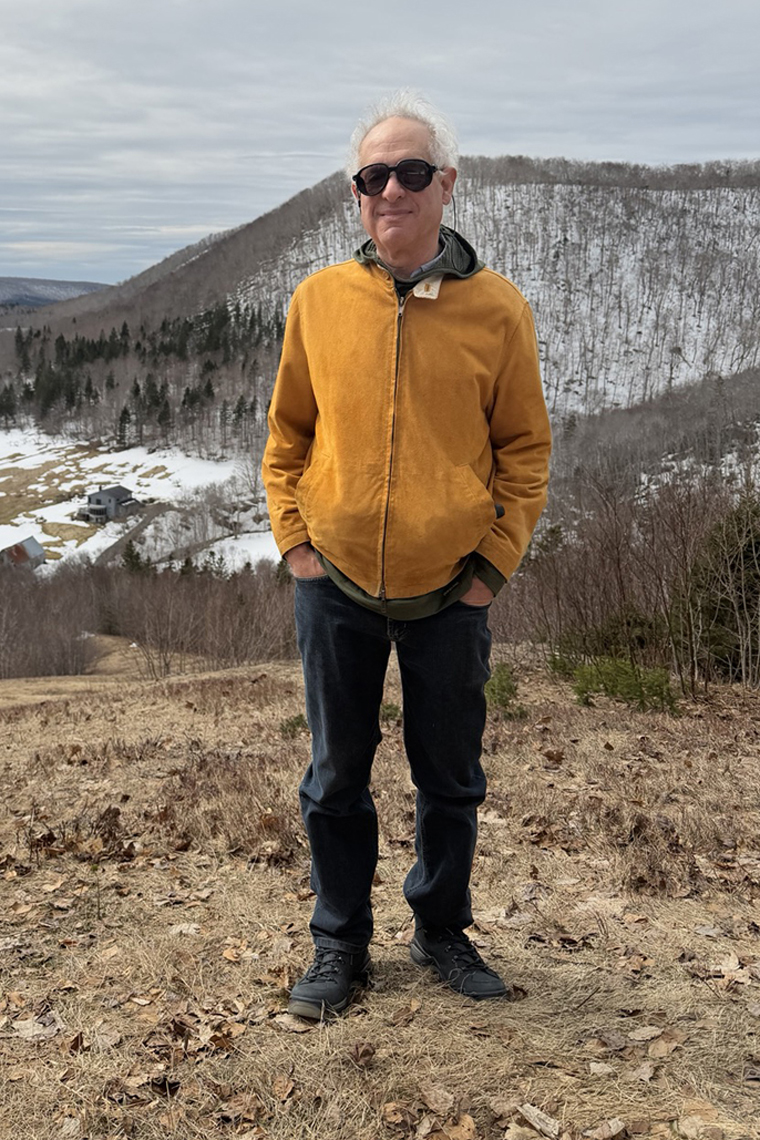
Neal Livingston of Black River Films has begun a multi-year project following the work of Dr. Dev Sidhu and his team as they develop new tools to fight disease.
-by Beverley Phillips
Black River Films is taking a deep dive into the cutting edge of biotechnology with a new documentary that is currently in production.
Filmmaker Neal Livingston is following the work of Dr. Dev Sidhu, a protein engineer, and his team. Sidhu has published over 200 scientific papers, and in 2015, was the recipient of the prestigious Christian B. Anfinsen Award of the Protein Society for his significant technological achievements in protein research.
Protein isn’t just something we put on the dinner plate; it is essential to every cell in our body and every life process. Sidhu’s work focuses on antibodies, proteins that are produced by the immune system, and remove unwanted substances, such as bacteria, viruses, and fungi, from the body.
“Dev is on the cutting edge of making multifunctional synthetic antibodies,” said Livingston. “It’s a limited field in the biotech industry that is focused on making these antibodies that will cure diseases. They either stop signalling in diseases that have cell multiplication, like cancer, or restart signalling in other conditions, even aging.”
His work has already had success in reversing macular degeneration and has a drug currently in clinical trials.
Livingston first heard of Sidhu during the COVID-19 lockdown. Dr. Elizabeth Gould, a doctor in Halifax, posted a video of an interview with Sidhu in which he said he was 100 per cent confident he had a treatment that could save you from COVID-19. “And what interested me was,” said Livingston, “in a number of the films that I’ve made, I’ve often interviewed scientists, and I’d never heard a scientist be as confident as Dev. He had a therapy that could be manufactured and available to Canadians, in a really timely basis that was safe and effective.”
With Livingston’s interest piqued, he looked up this Canadian researcher and discovered Sidhu has had a stellar career. From growing up on a farm in British Columbia, Sidhu went on to get his PhD in biochemistry from Simon Fraser University. He then went to California for his post-doctoral work in the Department of Protein Engineering at Genentech, a pioneer biotech company. In his research there, Sidhu developed a methodology that was key in developing Herceptin, a widely used breast cancer drug.
Livingston got in touch with Sidhu, and they got to know each other over the last few years. “About a year ago,” said Livingston, “I started discussing with him the idea of making a documentary about him and his team. My goal in making the film is to create a greater public awareness about what’s coming in terms of disease therapy. They’re working on a wide range of therapies for degenerative diseases and different kinds of cancers, that most of us know nothing about, and have no idea that these are coming. It’s also about who’s doing it, and how they’re doing it.”
So the documentary isn’t just going to be a profile of Sidhu. “I’m both portraying the development of their work over a couple of years, this whole world of designing synthetic antibodies, and how they come out to market, and why some come onto market faster,” said Livingston.
Livingston’s enthusiasm for Sidhu’s work and its possibilities is palpable as he talked about it.
“They’re at the absolute top of their game internationally,” he said. “The interesting thing about Sidhu’s work is that their whole thing is how do you take theoretical science, improve it, and move it into commercialization. And all of Dev’s team, you know, they need to make money. They need to get grants so they can continue to work at the level they want to work at. But they are essentially forming a new international pharmaceutical company through the work they’re doing, and one of the keystones, when you talk to them about it, is that these multifunctional antibodies be quite affordable. So, the social aspect interests them all as well. That’s why they are who they are, doing what they’re doing.”
Sidhu told Livingston that he could probably retire from the money he’ll make with the macular degeneration drug, but he’s reinvesting it all to keep going, to make new discoveries to help more people.
And while it will be a few years before the film is finished, Livingston is letting people see the raw interviews. “I decided, as a way of raising public awareness around the field that they work in, to post the raw interviews I’ve done so far on YouTube. I’ve never had any interest at all in posting raw interviews while making a film because you know you’re going to cut 80 or 90 per cent of each of those interviews down. But in this case, I thought, ‘This is really interesting just to hear these guys talk at length about what an antibody is, what a synthetic antibody is. How do you develop it? What does an antibody look like?’ So I thought, ‘Why not have these interviews available so people could look at them if they want to get some more information?’ And also, when I went and looked at what’s available, in terms of video material, there’s very little available on the web. There are some very high-budget programs that have been made for television about biotech, and there are a number of interviews with Nobel prize-winning people in that field. But none of them seem to be quite in the zone of explanatory information that I’m trying to work with here. There seems to be a lack of what I would call public information to understand what the field is about.”
The first round of interviews was recorded last December. He meets up with Sidhu and his team again in June in Montreal. To see the videos currently available, check out Neal Livingston’s YouTube channel, listed under his name. To easily find the interviews, go to the interviews playlist.