
-by Beverley Phillips
The impact of war, both literal and trade, is creating challenges for local industry.
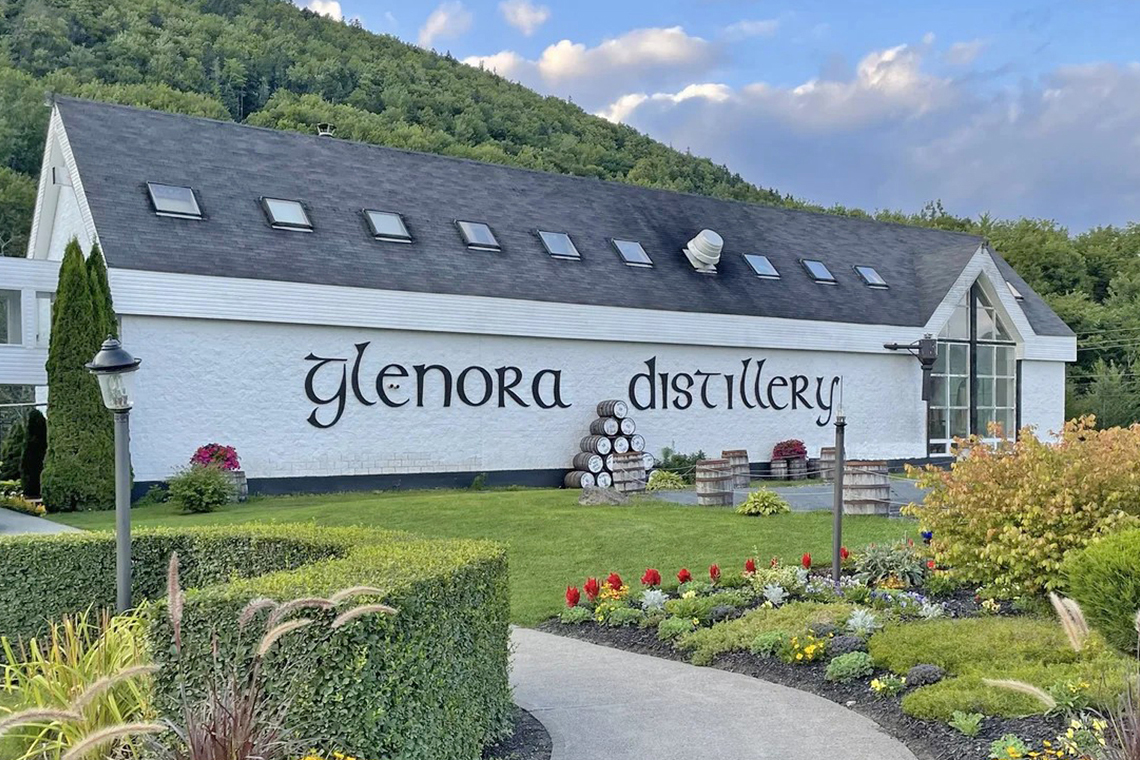
It’s been a challenging few years for the Glenora Distillery, the producer of Glen Breton, a premium single malt whisky. It began with the Russian invasion of Ukraine. Up until then, Russia was the distillery’s number one customer by volume. Ukraine was second or third. The war ended exports to both those countries. “So we started concentrating on the US,” said Lauchie MacLean, president of the Glenora Distillery. “It’s a difficult system in the US, but we decided to give it another go, and we were starting to see results.”
Until recently, those results were about one third of their revenue. The Donald Trump administration has made doing business in the United States increasingly difficult. “There were new restrictions and new paperwork,” said MacLean. “There was a time we had a shipment turned away on a day there were 120 semi trucks turned away because no one had this new paperwork.”
The ever-changing rules meant that, briefly, things seemed to settle down, and the distillery was preparing a shipment to head south before the total ban on Canadian alcohol comes into effect on September 29th. The ever-changing rules also mean it is hard to keep up with the latest. “We’re getting [an order] ready,” said MacLean, “and then our importer said, ‘There’s a 50 per cent tariff.’ I did not know that the 50 per cent tariff that Trump put in place three weeks ago was in place for alcohol. I thought it was for other things. The pricing and the structure we had with all our retailers and distributors down there just wasn’t going to work, so we have given up for a little while on sending bottled product into the United States.”
MacLean isn’t hopeful for a change anytime soon. “I don’t get the feeling there’s going to be any kind of solution in the near term,” he said, “so we just have to wait until January 2029.”
That’s when President Trump will have to leave office.
“In the meantime,” continued MacLean, “we’re hoping to expand into the Asian market, and revisit Western European countries.”
But it’s not just the trade war that is impacting the business. The price of fuel is another factor. “It’s a process where we distill this year, planning for 10, 15, 20 years out,” said MacLean. “The biggest issue we have this month would be the price of diesel. We run a diesel-steam boiler, and the price of diesel right now is double what it was last year. And we use a lot of diesel. When we’re operational, it ends up on a cost basis on our alcohol. We have to plan out. If we’re going to distill this week, ten years from now, our cost basis on our alcohol is increased 30 or 40 per cent.”
And it’s not just impacting Canadian distilleries. Diageo, the world’s largest producer of spirits, has 18 distilleries in Scotland. “Diageo has stopped production at three distilleries they own in Scotland,” said MacLean. “They’re looking at other layoffs at their bottling plants, and its not just because of diesel. It’s the Iran war. It’s the Ukraine war. It’s the general economy of rising inflation and people having to choose – do they buy food and heat, or do they look at discretionary spending on the premium bottle of whisky? There’s a whole rationalization going on in the whisky world, and we’re one very small spoke in this huge wheel that’s out there. Our team at Glenora is working diligently, and we plan to monitor week by week. We don’t expect layoffs immediately, but certainly no new hirings, and whether we distill as much as we had planned for this season – that’s up in the air.”
At the moment, it doesn’t look like there are any particular provincial programs they can access to get through the tough times. Rather, they are hoping the federal government can make a difference by lowering their excise tax. “Of the G7 countries, Canada is the only country that does not give a break to craft alcohol producers,” said MacLean.
He explained the current situation in the United States, where the excise tax was reduced from $52 to $2 for a case of spirits by craft producers. As producers in the United States are direct competitors of Canadian producers, this puts Canada at a competitive disadvantage in the global spirits market. “In Canada,” said MacLean, “there’s been zero assistance, federal government-wise. We’ve been asking them and saying all we want is to be treated on a more fair basis because it allows all of these distilleries in the United States, and around the world, to compete in a much more aggressive fashion in regards to how they look at sales locally, but also exporting, because they can save money production-wise, and get new markets.”
While MacLean isn’t happy with how the federal government is handling this aspect of the issue, he supports their handling of the trade talks with the US. “We’re 100 per cent behind our government in regards to saying ‘no’ to a trade deal that is wrong for Canada in the long run,” said MacLean, “but there are segments they’re missing, and we believe this is one of them.”
In the meantime, MacLean encourages the “elbows up” attitude. “Buy Canadian. Buy Nova Scotia,” he said.
And if you can afford it, consider buying that whisky lover on your Christmas list a premium bottle from your local distillery.